










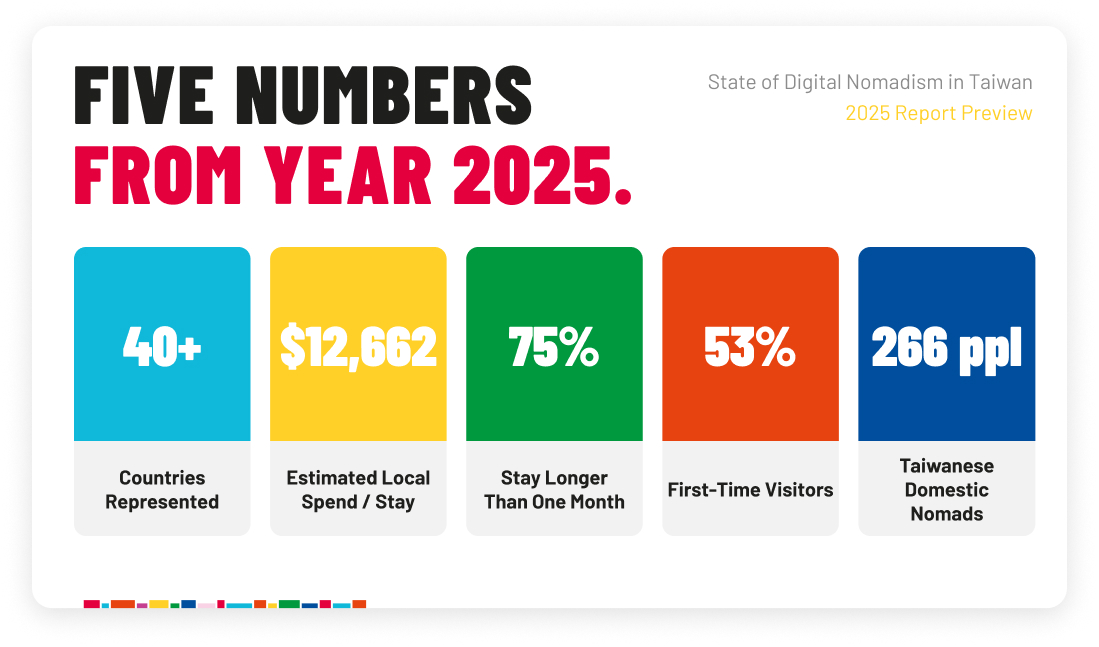
The State of Digital Nomadism in Taiwan 2025 is now online (the excerpt edition is free to read). The complete edition runs to about 40 pages and eleven findings. This article picks the five numbers that matter most and asks the same question of each: what do these numbers mean for Taiwan?
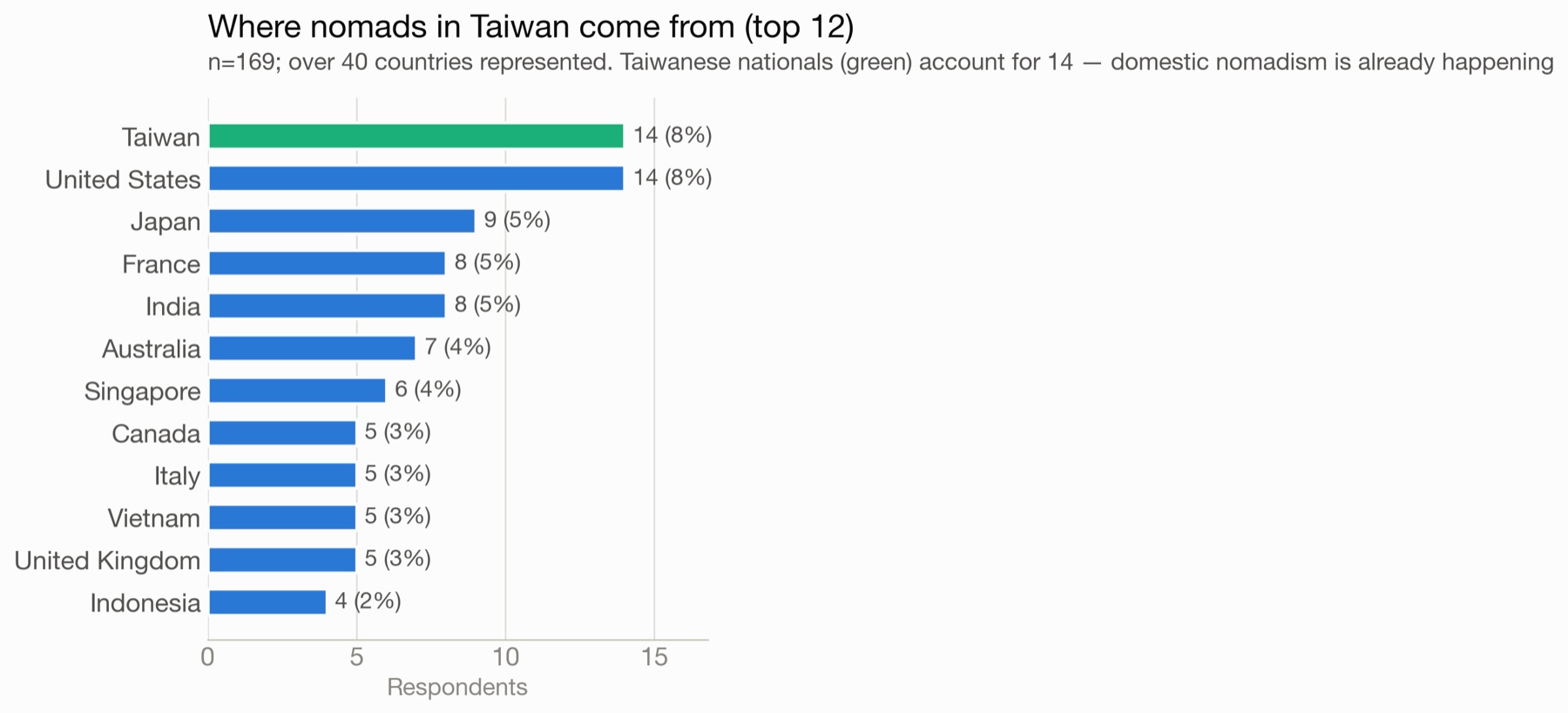
1. 40+ countries: Taiwan is still in a “multi-point trial” phase, and that is a feature, not a weakness
The nomads surveyed came from more than 40 countries and territories, with no single nationality above ten percent. Compared with the concentrated profiles of Bali (mainly Australian and Russian) and Chiang Mai (mainly European and American), Taiwan is currently a “multi-point trial” destination for a global audience. That means word of mouth has not settled yet, and the experience of the first wave of visitors will decide how Taiwan is described in the global nomad community. The quality of the welcome in year one is the marketing for the next five.
2. 10×: long-stay spending deserves a policy mindset different from tourism
Nomads spend an average of USD 2,159 a month and stay an average of five months, so one stay generates an estimated USD 12,662 in local spending. That is about ten times what an inbound visitor spends per trip (USD 1,276, Tourism Administration, 2024), and still more than three times on a conservative median basis. Where the money goes matters even more: it is not one-off income for hotels and attractions but everyday spending that lasts for months and flows into rent, markets, restaurants and shared spaces. Neighbourhoods and second-tier towns that are not tourism-led feel it most. (*Scenario estimate; methodology in Chapter 10 of the report.)
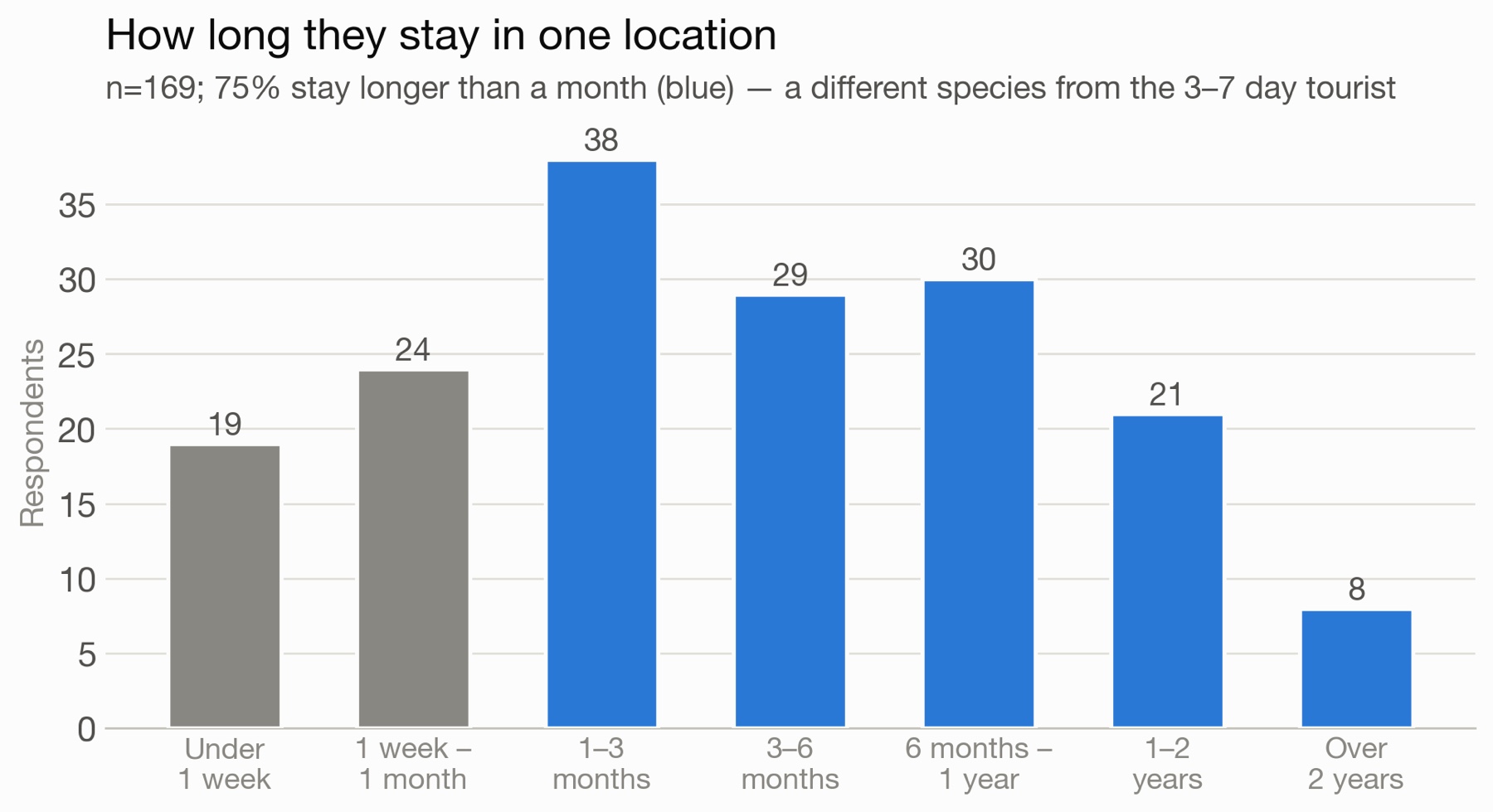
3. 75% stay long: they are residents, not tourists on an extended trip
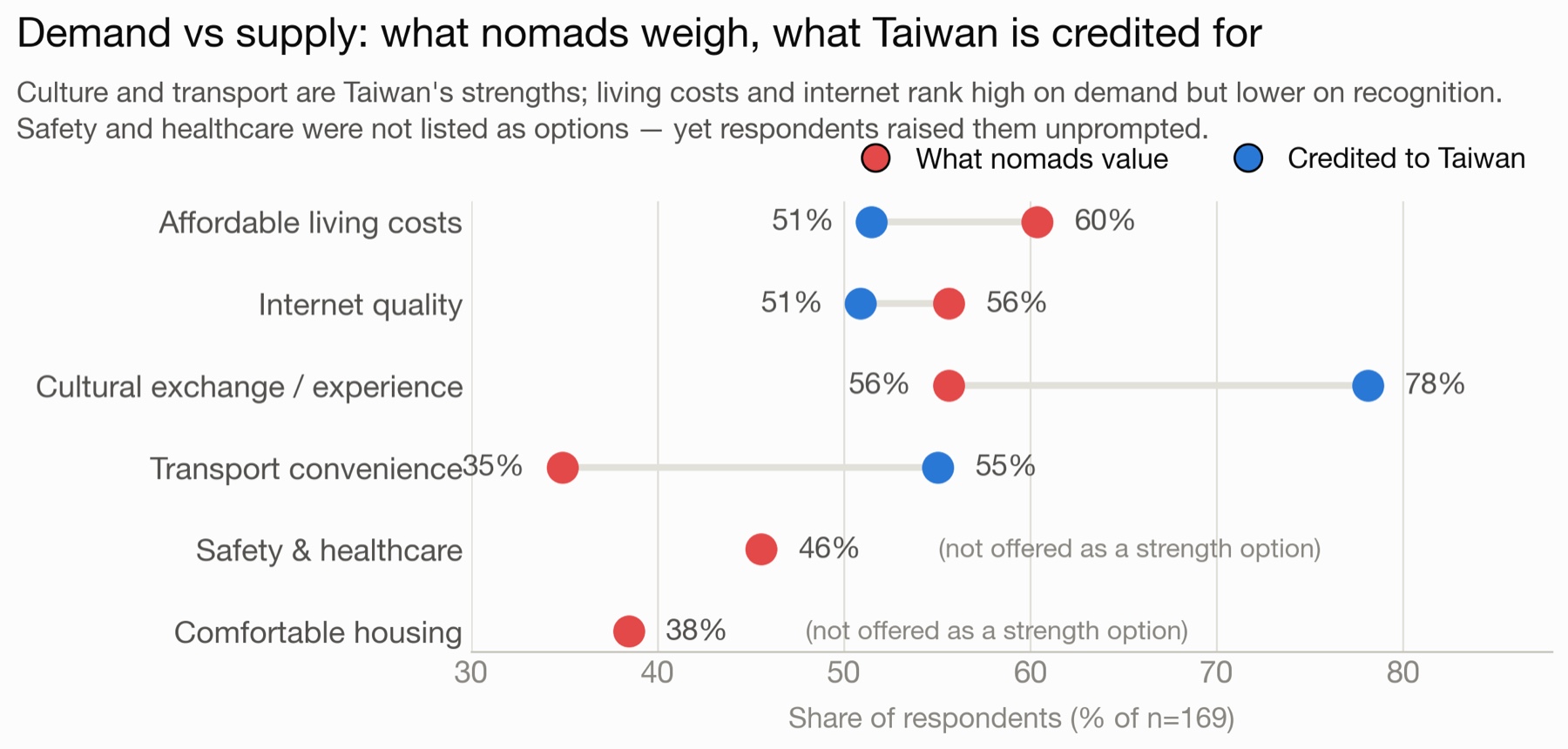
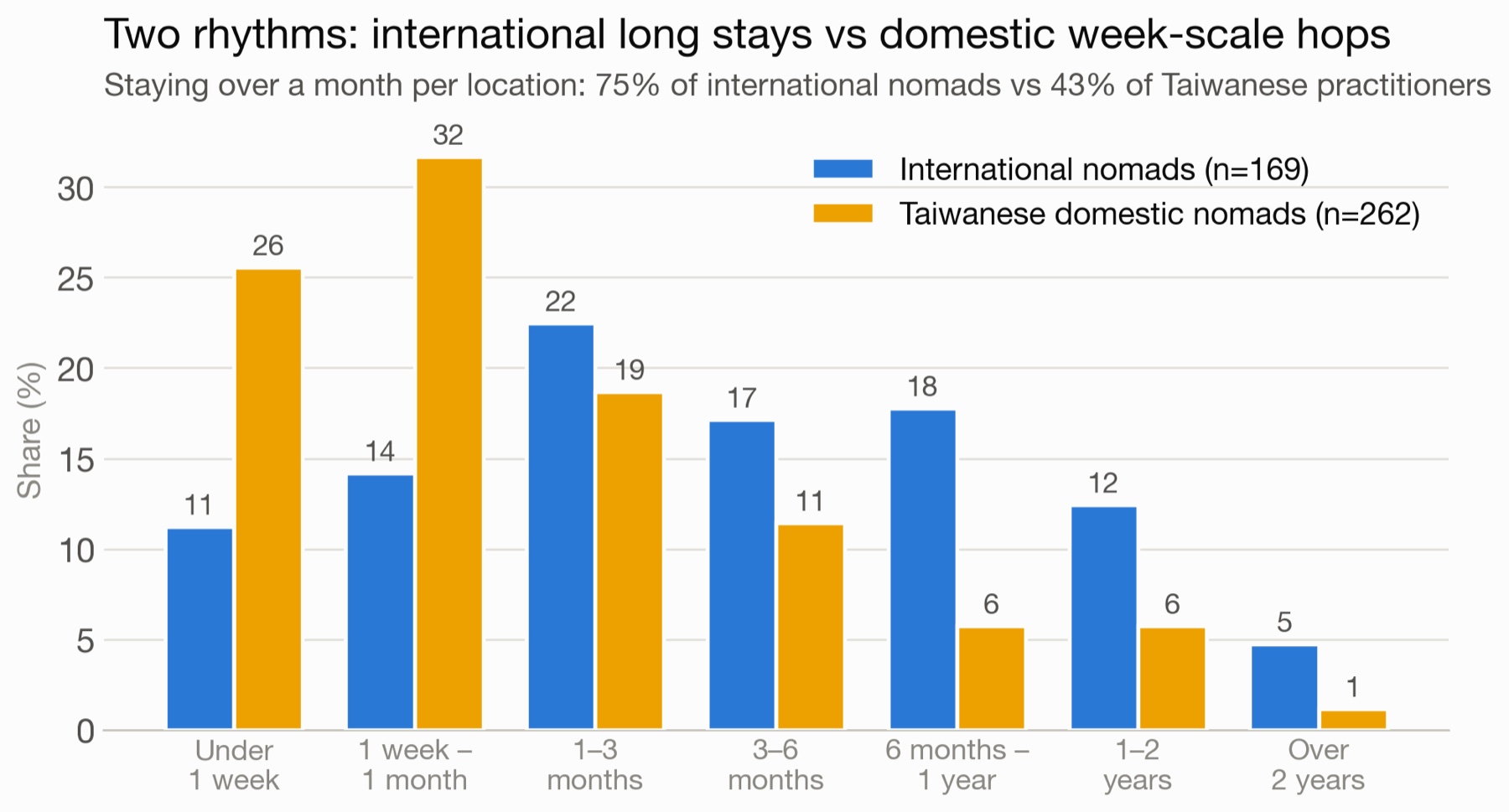
Three quarters of nomads stay more than one month in a single location, most commonly one to three months. They rent homes instead of staying in hotels, shop at markets instead of touring attractions, sign up for a mobile plan and use local healthcare. This is exactly where the report finds the biggest gap: there are few mid- to long-term accommodation options, and rental information is not friendly to foreigners. The pain point labelled “cost of living” is really about housing.
4. 53% are first-time visitors: the window is open, and the experience decides who comes back
More than half of the nomads surveyed were visiting Taiwan for the first time. Half of this group are experienced nomads who will compare Taiwan with Chiang Mai and Lisbon and write it up on blogs and community forums. How easy it is to find arrival information, how smoothly renting goes, whether the community catches them: every step adds to, or draws down, Taiwan’s global reputation.
5. 266 home-grown practitioners: the ecosystem’s second leg is already standing
In the online survey, 266 Taiwanese respondents are already nomading within Taiwan. 57% stay less than one month in one place and move week by week, mostly along the western corridor, yet the place they most want to go is Taitung (18%), which points in exactly the same direction as international nomads’ interest in the east coast. Domestic nomads are the weekday customers of shared spaces, the hosts of community events and the first connections international visitors make when they land. Investing in infrastructure for domestic nomads is investing in the capacity to host international ones.
So what comes next?
The report’s one sentence for policymakers: Taiwan has already attracted the right people. The next step is not louder marketing but completing the “visa product”: a longer path to stay, a single point of entry for information, mid- to long-term accommodation, links to health insurance and banking, and places where nomads and local communities actually meet.
The full cross-analysis, international comparison and policy recommendations are in the complete edition. To obtain it, please write to us@dna.org.tw; the excerpt edition remains free.
![[Event] Taiwan Digital Night · Fukuoka Edition, 4 October at Colive Fukuoka](https://dna.org.tw/wp-content/uploads/2026/10/featured-taiwan-digital-night-fukuoka-2026-en-1024x508.jpg)
![[Event] Taiwan on the Rocks — Taiwan Digital Night at NoMaps 2026, Sapporo](https://dna.org.tw/wp-content/uploads/2026/10/featured-taiwan-night-sapporo-2026-en-1024x558.jpg)
![[Event] Kaohsiung Tech Night, 25 Sep — AI, Design and Digital Nomads Gathering.](https://dna.org.tw/wp-content/uploads/2026/10/featured-kaohsiung-tech-night-2026-en-1024x577.jpg)