

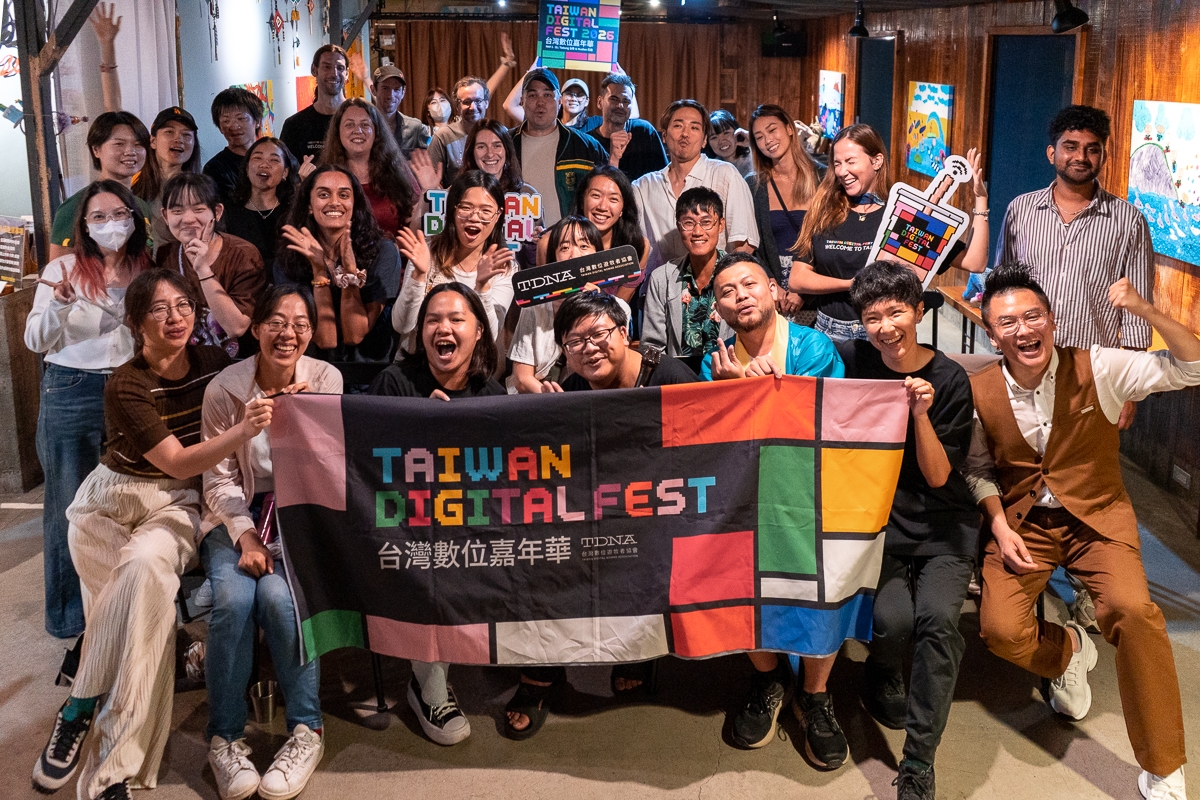
Getting to Taitung is not easy, and nobody pretends otherwise. Trains are infrequent, renting a car is the norm, and the trip from Taipei takes most of a day.
Yet what stayed with Fran, Vice Chairperson of the TDF 2026 organising team, was what happened after each event: people did not go home. They organised the next stop themselves. Nobody scheduled the after-parties; they just happened.
“That was when I realised the event had done what it was designed to do.”
Our annual report has a contradiction running through it. Two samples that barely overlapped — 169 international nomads and 266 Taiwanese practitioners — both named Taiwan’s east coast as the place they most wanted to work from, yet actual stays cluster along the western corridor. In May 2026, Taiwan Digital Fest moved its flagship event from the north to the east.
What is Taiwan Digital Fest?
Taiwan Digital Fest (TDF) is the annual international event hosted by the Taiwan Digital Nomad Association (TDNA). It brings international and Taiwanese digital nomads, remote workers and freelancers to the same place at the same time — through workshops, community meetups, industry visits and local experiences — so that working and living in Taiwan becomes something you can actually try.
TDF 2026 ran from 1 to 31 May 2026 in Taitung and Hualien, a full month. It was co-hosted by TDNA and the Taitung County Government.
Each week had its own theme and area. Leaving participation open and flexible reflected how nimbly nomads move — and how quickly they come together:
| Week | Theme |
|---|---|
| Week 1 | Regional revitalisation and startups |
| Week 2 | Arts, humanities and design |
| Week 3 | Culture, travel and experiences |
| Week 4 | Tech, remote work and co-creation |
| Week 5 | Guided trips |
The programme covered AI and remote-work workshops, community sessions, cultural immersion, cycling through rice fields, ocean tours and hot springs, along with the Nomad Award short-video competition. Tickets came in five tiers, from the free Follower pass up to Backer, with access widening at each level — the top tier covered more than 50 events.
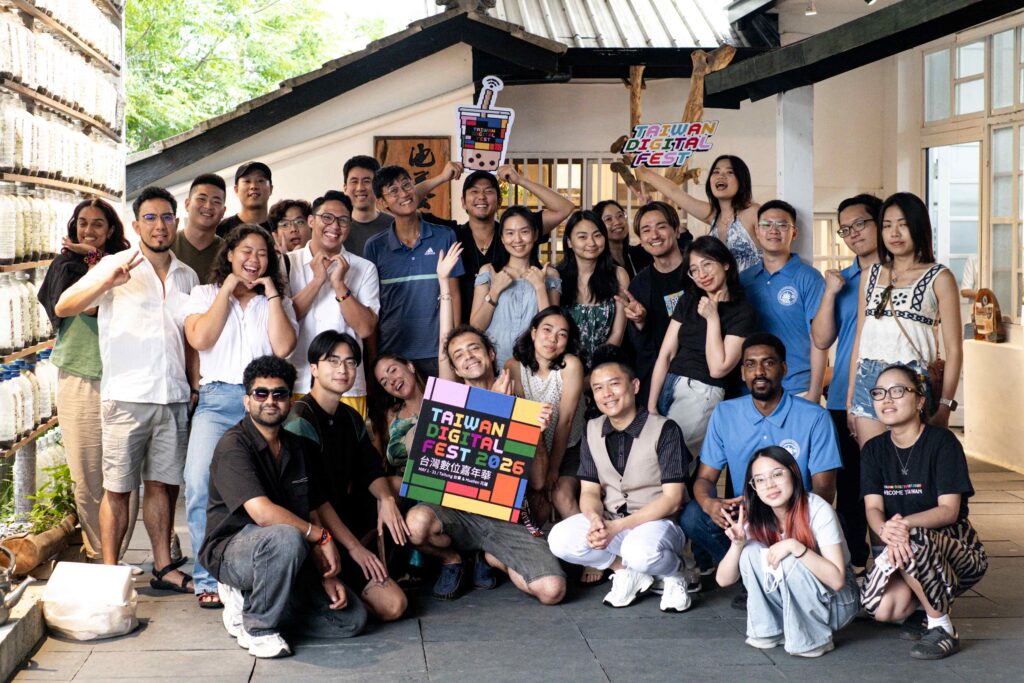
At a glance
| Item | Figure | Source |
|---|---|---|
| Dates | 1–31 May 2026, 31 days | TDF 2026 website |
| Host areas | Taitung and Hualien counties | As above |
| Events | 50+ on the top ticket tier | As above |
| Total participants | About 250 | Organiser figures |
| Foreign participants | 176, about 70% | Organiser figures |
| Volunteers | 25, from 11 countries and territories | Staff roster |
| Cost of a month in Taitung | About NT$25,000–40,000 | TDF 2026 website guide |
| Top county Taiwanese nomads most want to work from | Taitung, 18% (n=266) | 2025 report, 6.3 |
| International nomads’ wish list | Hualien 11, islands 9, Taitung 8 mentions (n=169) | 2025 report, 7.1 |
| International nomads staying over a month in one place | 75% (n=169) | 2025 report, 3.2 |
TDF 2026 set out to do something different
TDF 2025 was more of a festival: 1 to 8 June, seven days, more than 500 participants, based in Taipei. The programme ran along five tracks — digital nomadism, coworking, coliving, crypto and startups — with communities and speakers from Korea, Japan, the Philippines, Latvia and Thailand taking turns to present their countries’ nomad policies and scenes.
For 2026, Chairperson KK, together with Fran, Richard and the on-site team, replaced the design goal altogether. Seven days became a month; Taipei became Taitung and Hualien.
“2026 was about travelling deeper, understanding the culture better and experiencing what it is like to live together for a longer stretch.” KK hoped the design would strengthen the bonds between community members and leave them with memories made together.
This was more than a change of itinerary. An event measures success in headcount and buzz; a long stay measures it in relationships — how many people got to know each other, how many want to come back. The second is harder to measure, but it sits closer to the problem the report identified: the east coast has never lacked scenery. What it lacks is a reason to stay.

Why the east coast
Local government support was a precondition, but not the only reason.
“Living costs are lower,” Fran says, “and for international visitors it is a harder place to reach. For foreigners, that makes it a rare opportunity.”
That reasoning is worth unpacking. Most events avoid places that are hard to get to. TDF inverts the logic: precisely because the east is hard to reach, few people go on their own — and that is what gives an organised event its reason to exist. Being hard to reach is not a drawback. It is the point.
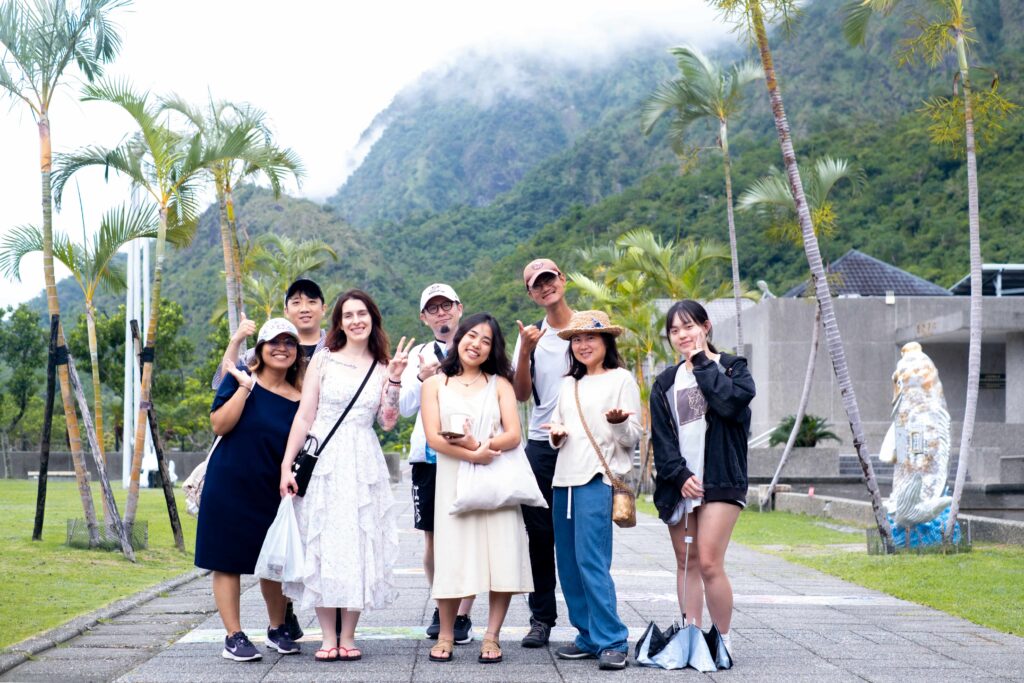
Two long, narrow counties, two event designs
Hualien and Taitung both took part, but they ran completely different formats.
Hualien moved as a group, run as a workation: everyone joined the same activities, paired with industry and company visits. The schedule was dense — suited to people with limited time who wanted to see it all in one go.
Taitung was a full month of free choice: participants picked the sessions that interested them, with far more flexibility. This format sits closer to how nomads actually live. They are not simply on holiday — they travel with laptops, and the schedule has to leave room for work.
One event, two rhythms — a rare arrangement for a jointly run county event in Taiwan.
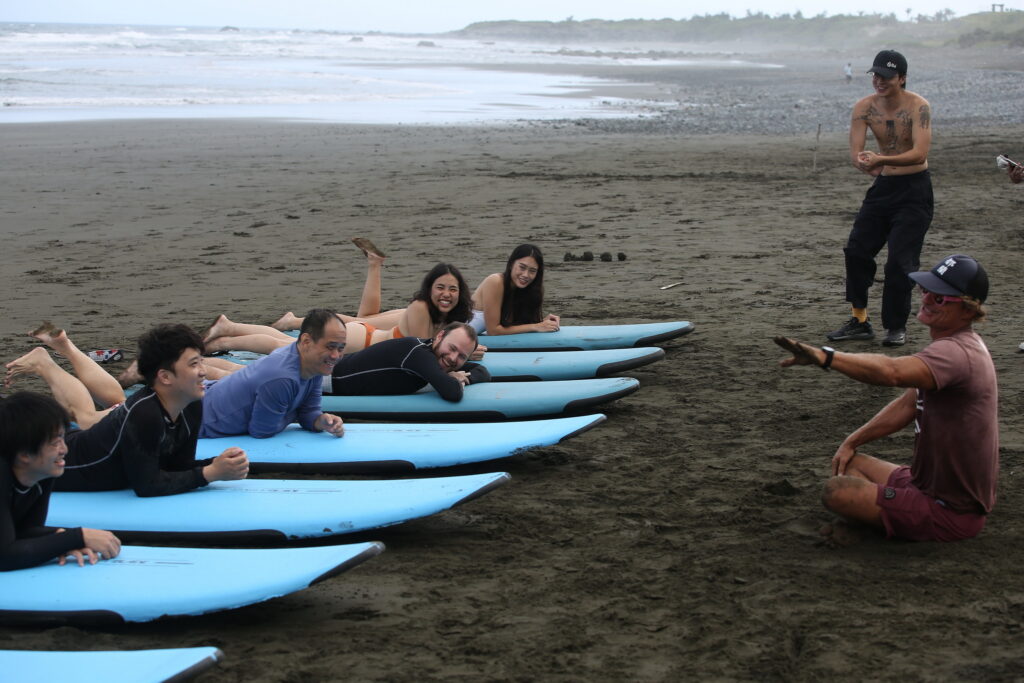
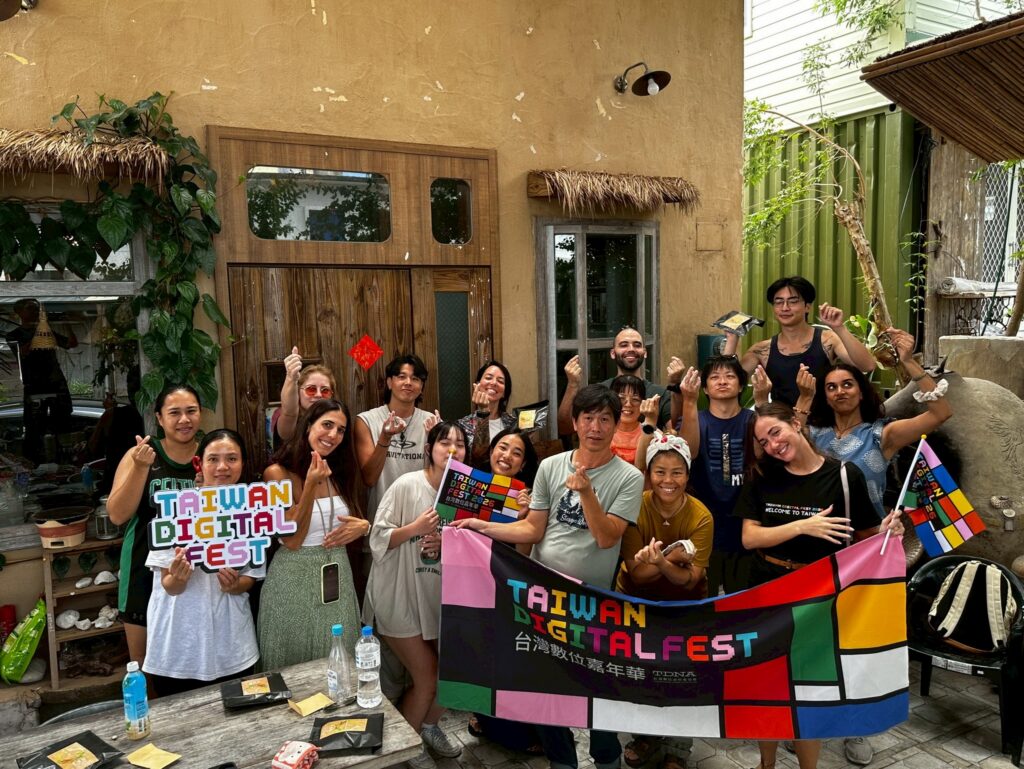
Who came
TDF 2026 drew about 250 participants, 176 of them foreign nationals — roughly 70%.
But when asked who those international participants were, Fran’s answer was unexpected.
The nationalities themselves were no surprise. What caught her attention was that many of them had been living and working in Taiwan for years, yet had never been to the east coast.
In other words, “foreign” does not mean “flown in from abroad”. A good share of those 176 people use Taiwan as their home base — foreign passports, but daily lives in Taipei, Taichung and Hsinchu.
This turns the report’s numbers into actual people. The report found the east coast ranked first for desirability while real stays clustered in the west, and we had assumed that was because international nomads had not yet come to Taiwan. What TDF 2026 showed on the ground was different: even people who have lived in Taiwan for a long time have not really been to the east.
The problem is not that they have never heard of it. It is that they lacked a reason, a moment and a group of people to go with. That is exactly what an event can supply.
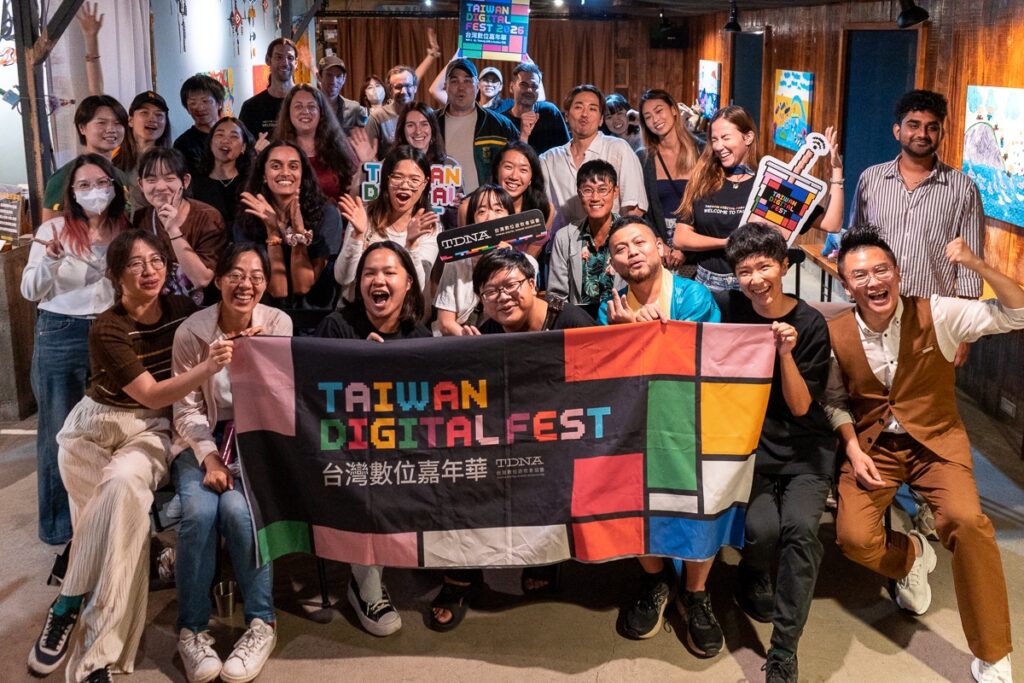
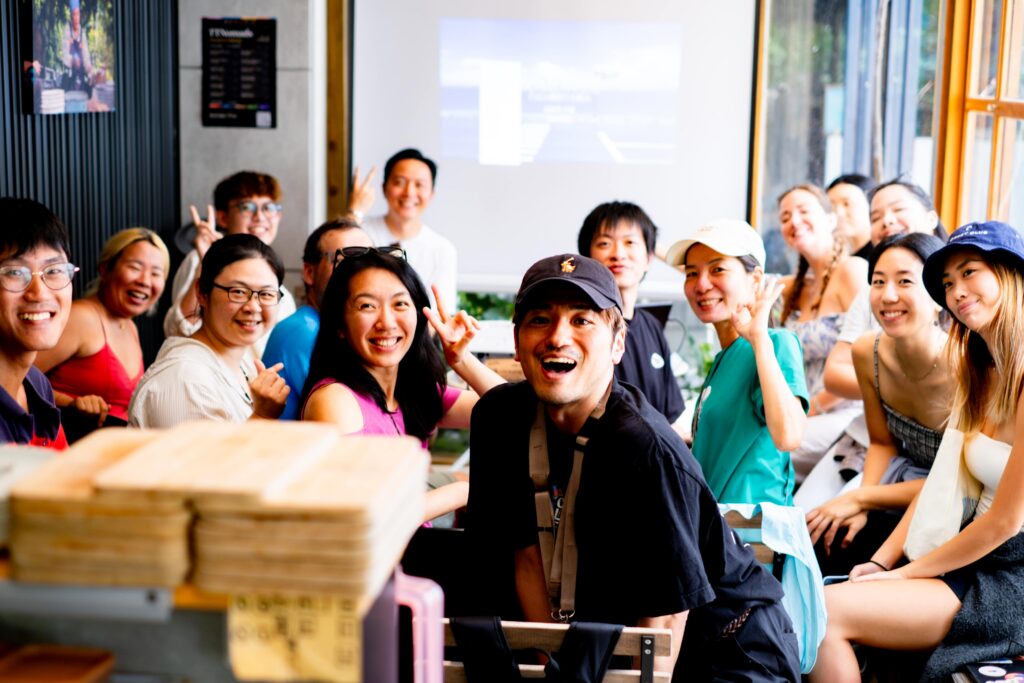
The most popular sessions were the ones where people could bring what they know
Of all the sessions, the ones built around exchange were the most popular.
Fran gave two examples, both in Dulan, Taitung. One was 詩瑜 Osay‘s talk on reviving the Amis language. She appeared in traditional Amis dress — a choice that was itself part of the message. The other was a foreign anthropology professor sharing years of research in Taitung.
What the two had in common was that the audience did not just listen. Nomads brought their own international experience and expertise into the room, and the exchange ran both ways until the line between speaker and audience blurred. Warmth, care and goodwill between people became visible in moments like these.
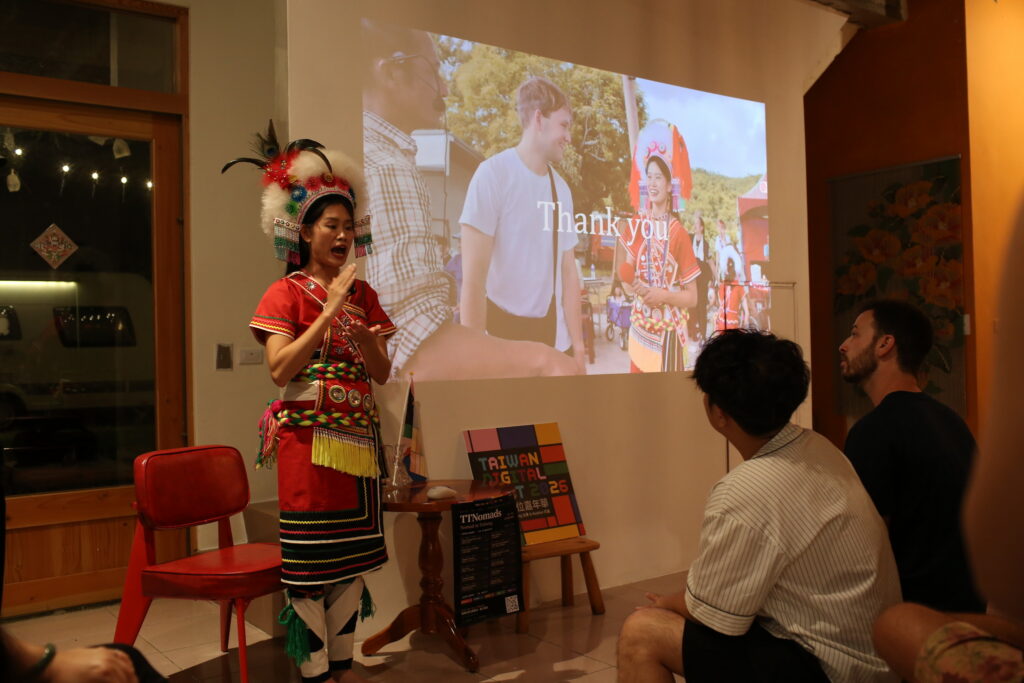
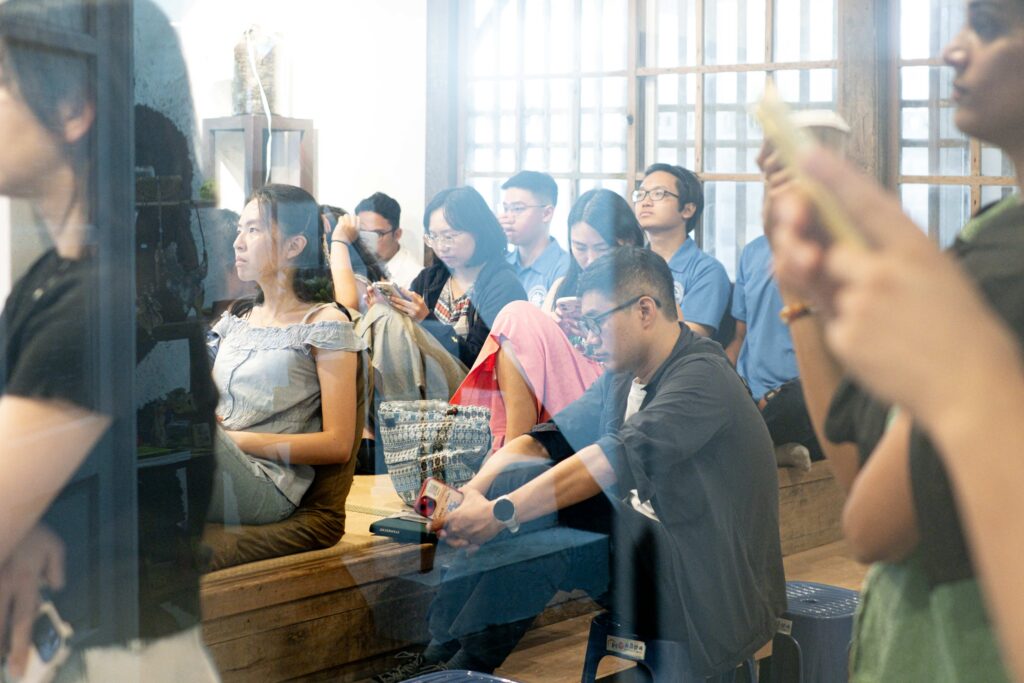
It matches a finding in the report: international nomads rank cultural experience as Taiwan’s top advantage (78%), and 56% say the chance to engage with local culture shapes where they choose to base themselves. They do not want to watch culture. They want to be part of the conversation.

The cost of a two-county model
Two counties and two rhythms brought flexibility — and a number of hidden costs nobody had fully anticipated.
“When you run it jointly, the information has to be unified,” Fran says. “It is easy for each county to do its own thing and forget to give participants one consistent picture.”
Even more draining was something else: continually communicating with, and aligning the expectations of, organisers and participants. No single briefing solves that; it is work that goes on for the whole event.
For anyone considering a multi-county event, this may be the most useful takeaway: the real cost of running across counties is not budgets or venues — it is keeping what you tell the public consistent. Participants do not distinguish which county a session belongs to; they just find the information messy. The team, determined to get it right, closed those gaps by checking proactively and stepping in to fix things as they came up.
After the festival: Reconnect
After TDF in May came TDF Reconnect in August: 20 nomads from Taiwan and abroad returned to Taitung for three days.
The two are not an event and its encore; they are a test and its check. TDF tested whether a large event could bring people to the east coast. Reconnect tested whether small groups spending longer together could make people think about staying.
Further reading: TDF Reconnect Taitung recap, TDF 2025 recap
Looking ahead to 2027
Turning a vague impression into a concrete picture
The TDF 2027 website is already live with promotion at home and abroad, and the plan pushes one step further internationally than 2026.
TDF 2027 runs from 19 April to 31 May 2027 across Hualien, Taitung and Green Island, in three segments — two weeks, four weeks and a three-day trip:
| Segment | Dates | Format |
|---|---|---|
| Hualien Workation | 4/19–4/30 | Two weeks, two bases, about 40 people |
| Taitung Nomad Month | 5/1–5/28 | Four weeks rotating across four areas, 200+ sessions |
| Green Island | 5/29–5/31 | Three days, 15 people, self-funded |
Compared with 2026’s two counties over one month, 2027 adds an outlying island, formalises the Hualien workation as a small capped group, and takes Taitung’s programme from around 50 sessions to more than 200. Early-bird tickets run until 1 November 2026.
The international groundwork is under way too. “Internationally, and especially in the West, people’s picture of Taiwan is not very clear,” Fran says. The approach is to plug into nomad events already running in other countries and host Taiwan cultural exchanges inside them — Taiwan Digital Night at NoMaps in Sapporo this September was one of them.
The point is not scale. It is the connections that come from partners and volunteers on the ground sharing their own stories. “To turn a vague impression into something people can picture and feel.”
In other words, the groundwork for TDF 2027 is being laid not only in Taiwan but at other people’s events — meeting strangers, making first contact and turning that into interest.
Official sites: TDF 2027 | TDF 2026 | TDF 2025
Tempted yet?
“If you want to experience a place, its people and its culture, build real cultural connections, and find some peace and love along the way — you have to come to Taiwan for TDF.” That is from a 2026 participant. Don’t hesitate — start planning your trip!
We are also collecting more stories from TDF participants, to help others get a feel for what it is really like.
If TDF has won you over and you have a story to share, submit it through our form. We will be in touch within two weeks, and you will always see the draft before it is published.
Method and limitations
Figures on nomad preferences and length of stay come from the 2025 State of Digital Nomadism in Taiwan. Sample A (n=169) was a convenience sample drawn at physical venues in Taipei and Taichung; Sample B (n=266 practitioners) was distributed through community channels. Neither is a probability sample, and neither should be extrapolated to a national population.
Participant numbers, event counts and composition were provided by the organisers. Descriptions of participants’ backgrounds are the organisers’ on-site observations and have not been statistically verified.
Taiwan Digital Fest is hosted by the Taiwan Digital Nomad Association. This article is an organiser’s account, not an independent evaluation.
Frequently asked questions
Where and when was TDF 2026 held?
Does TDF cost anything?
Can I join if I am not a digital nomad?
How is TDF different from TDF Reconnect?
When and where is TDF 2027?
Acknowledgements
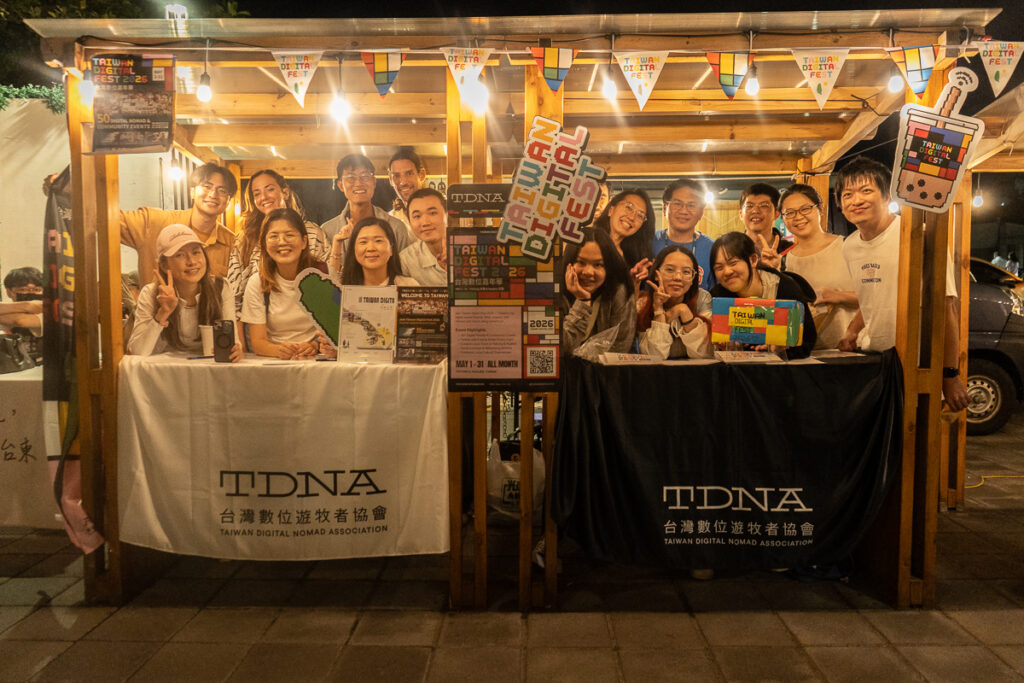
TDF 2026 ran for a month, across two counties and dozens of events. It was made possible by the people and partners below.
Organising team
| Name | Role |
|---|---|
| KK (徐愷) | Chairperson |
| Fran | Vice Chairperson |
| Richard | Vice Chairperson |
| 唐唐, Tina, Susu, Brian | Event Manager |
| Sophie | Event Manager (Hualien) |
| Maria, Nikoleta | Community Manager |
| Jojo | Documenter Manager |
| Glacia | SNS Marketing |
| Isabella | Email Marketing |
| Irene | Media Marketing |
Volunteers
25 volunteers from Taiwan, Canada, the Philippines, India, Singapore, Hong Kong, the Czech Republic, Mongolia, Japan, the United States and Indonesia:
Alex Micalef, Alice Hsu, Allen, 陳玉樓 (Chris Chen), Derek, Febrina Liu, Hitesh Parihar, 黃柏傑 (Jay), 郭惠如 (Jocelyn Kuo), Ma. Kathleen Dulsi B. Enate, Kelly Lo, Aileen Palaran, Liann Shannon, Martin Fišnar, Li Mei Yi, Mel, Misheel Batbayar, Rachel Goh, 李宇芹 (Riva), Jayme J. Mariño, Robert Schmidt, Susmita Adhikari, Tomohiro Mizuguchi, Yuri, Irina Syshchikova
Photography
Jay, Irina Syshchikova, Derek, 陳玉樓 (Chris Chen), Aileen Palaran, Li Mei Yi, Tomohiro Mizuguchi, 李宇芹
Hosts
Taiwan Digital Nomad Association (TDNA), Taitung County Government
Partners
南迴永續旅行聯盟 (South Link Sustainable Travel Alliance), 源天然 (Yuan Tian Ran), Roots Coworking, HerFlow, Tsaomin Brunch, Nomad Taiwan, Engineer Cafe (Fukuoka, Japan), goodroom (mid- to long-term rentals, Japan)
Finally, thank you to every participant. Fran says what convinced her it had worked was not any item on the programme, but the plans people made among themselves once the day’s events ended. As she put it, life in Taitung was better for having you all here.
Further reading
- State of Digital Nomadism in Taiwan 2025 (free summary edition)
- TDF Reconnect Taitung recap
- TDF 2025 recap
- Digital Nomad Friendly Badge
- Nomad Taiwan information portal (National Development Council)
How to cite
Taiwan Digital Nomad Association (2026). “TDF 2026 Taitung & Hualien Recap: One Month, Two Counties, 250 Nomads.” https://dna.org.tw/en/events-en/taiwan-digital-fest-2026-recap-en/
About TDNA
The Taiwan Digital Nomad Association (TDNA) is a non-profit working to develop Taiwan’s digital nomad ecosystem. It takes part in policy discussion on Taiwan’s digital nomad visa, runs the Digital Nomad Friendly Badge, maintains a network of venues and communities across Taiwan, and publishes an annual survey of the ecosystem. Partnership enquiries: us@dna.org.tw