

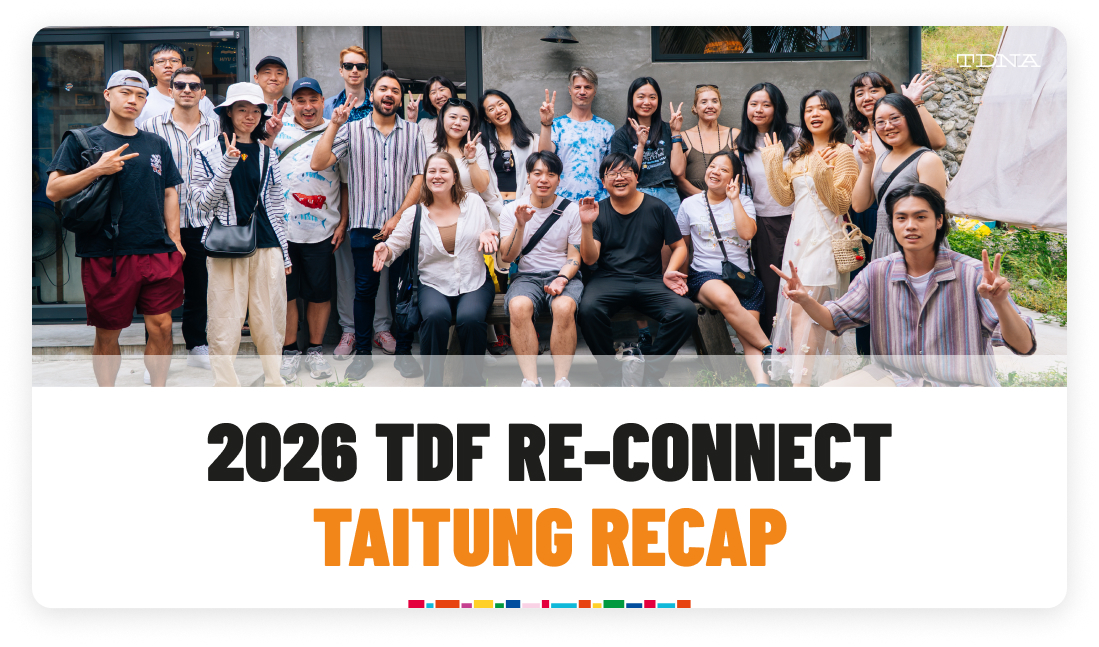
TDF Reconnect Taitung 2026
Our annual survey turned up a finding worth testing: two separate samples that shared almost no respondents — 169 international nomads and 266 Taiwanese domestic ones — both named Taitung as the place they most wanted to go. From 8 to 10 August 2026, the Taiwan Digital Nomad Association (TDNA) and the Taitung County Government took that finding into the field. Twenty nomads, Taiwanese and international, spent three days crossing the valley, the coast and the city to see how far “the place people want to go” sits from “the place people can actually stay.”
At a glance
- Event: Nomad Mini Trip — TDF Reconnect, a three-day route through the East Rift Valley and South-link Coast, closing with a guided visit to Taitung Expo
- When and where: 8–10 August 2026, Taitung (Chishang, Taimali · Jinlun · Duoliang, Taitung City)
- Size: 20 international and Taiwanese digital nomads, three days across three geographies
- Host: Taitung County Government | Operator: Touring Co., Ltd. | Supporting partner: Taiwan Digital Nomad Association
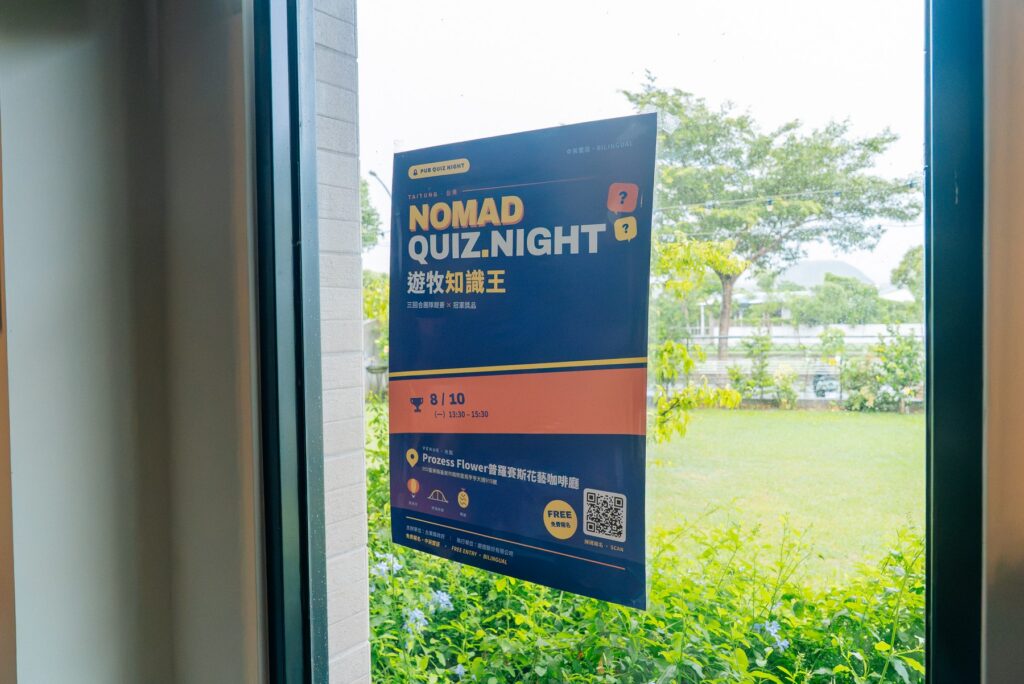
- Add-on session: Nomad Quiz Night, a bilingual pub-quiz meetup on the afternoon of 10 August
- Design intent: not a sightseeing tour, but a field test of the “workability gap” our report identified on Taiwan’s east coast
| Metric | Value | Source |
|---|---|---|
| Top county Taiwanese nomads most want to work from | Taitung, 18% (n=266) | 2025 report, 6.3 |
| East coast and outlying islands on international wish lists | Hualien 11, Islands 9, Taitung 8 mentions (n=169) | 2025 report, 7.1 |
| International nomads staying over a month in one place | 75% | 2025 report, 3.2 |
| Spend per nomad stay vs. one tourist visit | About 10x | 2025 report, 3.3 (scenario estimate) |
| Participants on this trip | 20 digital nomads | On-site check-in |
| Taitung Expo 2026 run | 3 Jul – 20 Aug, 49 days | Taitung County Government |
Why Taitung: the gap in the data
The 2025 State of Digital Nomadism in Taiwan drew on two non-overlapping samples: 169 international nomads reached through physical venues, and 266 Taiwanese practitioners reached online. Both groups had clustered their actual stays along the western corridor — Taipei, Taichung, Tainan. But asked where they most wanted to go, both rankings flipped at once. Taiwanese respondents put Taitung first at 18%, ahead of Taipei (14%) and Tainan (13%); international wish lists pointed the same way, toward the east coast and the islands.
The report’s conclusion was blunt: the demand is already queued up; what is missing is workability — reliable internet, somewhere you can sit and work for eight hours, and housing you can rent by the month rather than the night. TDF Reconnect took that conclusion back to the ground. With transport, lodging, company and working conditions all handled, how would a group that moves in month-long units read Taitung?
Day one, the valley: Chishang through a grain of rice
The first day ran through the East Rift Valley. Lunch was at the Wu Tao Chishang Lunchbox Culture Museum, entering the rice country through the century-old story of the railway lunchbox. The afternoon moved to Rice School for a milling workshop — running the grain through the process by hand, from paddy to polished rice. Then Blueseeds Park, where a local company has taken over a disused public site to build a herb-based circular business.
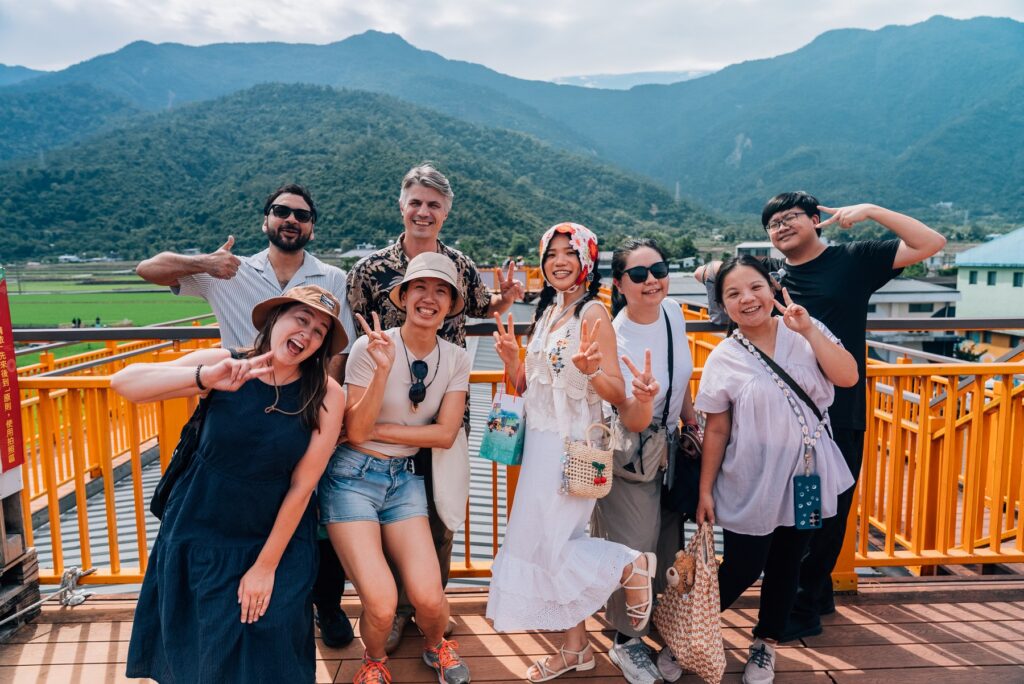
In the low light of late afternoon the group rode e-bikes through the fields around Brown Boulevard — e-bikes rather than motor vehicles, deliberately, to keep the disturbance to working farmland down. Dinner was a round-table set menu at a Chishang restaurant, which is where the conversation usually gets going anyway.
Day two, the coast: slow travel in Jinlun
The second day headed south along the coast. The morning opened at Haiyu Village in Taimali facing the Pacific; lunch was Indigenous-style cooking at a Jinlun kitchen. The centre of the afternoon was a single deep experience: a two-hour village walk and craft workshop led by pinuliman, a studio run by young Paiwan people from Jinlun itself — place names, community memory, and the practical knowledge that sits underneath both.
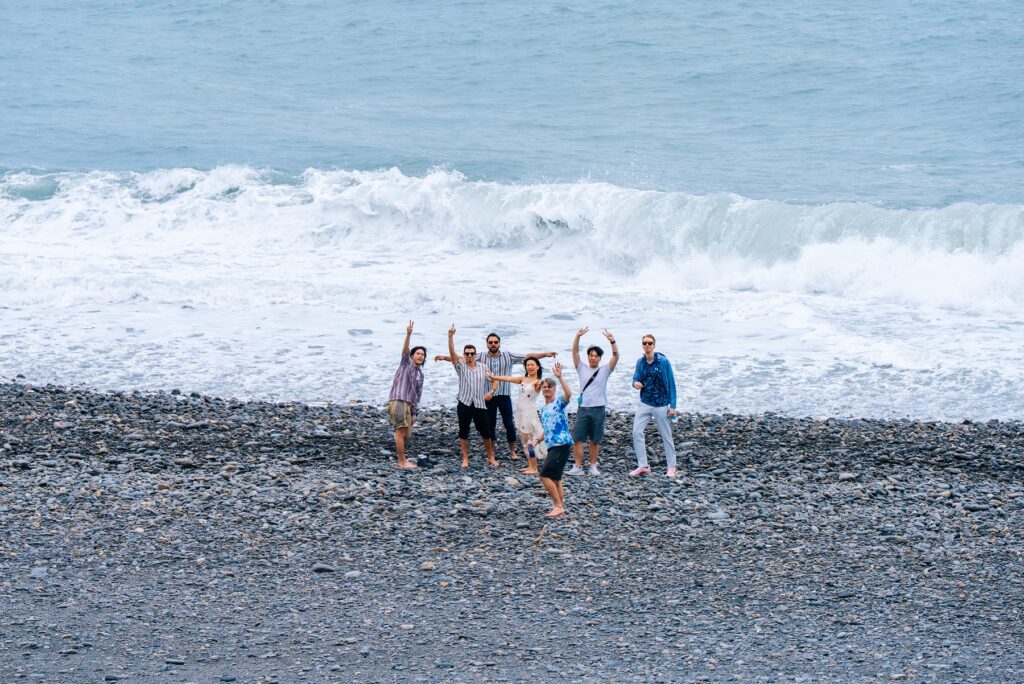
The itinerary was built by subtraction. No entering private spaces, no disrupting daily village life, and time-capped stops at busy spots such as Duoliang Station. Fees from the walk go directly to the young team running it. Culture here is not an exhibit staged for visitors; it is a way of living that visitors are given the chance to understand.
The evening reunion party was the emotional high point of the three days. People who met at TDF in May found each other again, joined by newcomers from Taiwan and abroad, and the talk about work, travel and living somewhere for a while moved on its own.
Day three, the city: “Slow for Life” at Taitung Expo
The last day returned to the city and the main site of Taitung Expo 2026 at the Old Station district. The county’s flagship event ran 49 days, from 3 July to 20 August, built around a “Slow for Life” curatorial theme across five zones and ten themes, tying together twelve of Taitung’s event brands.
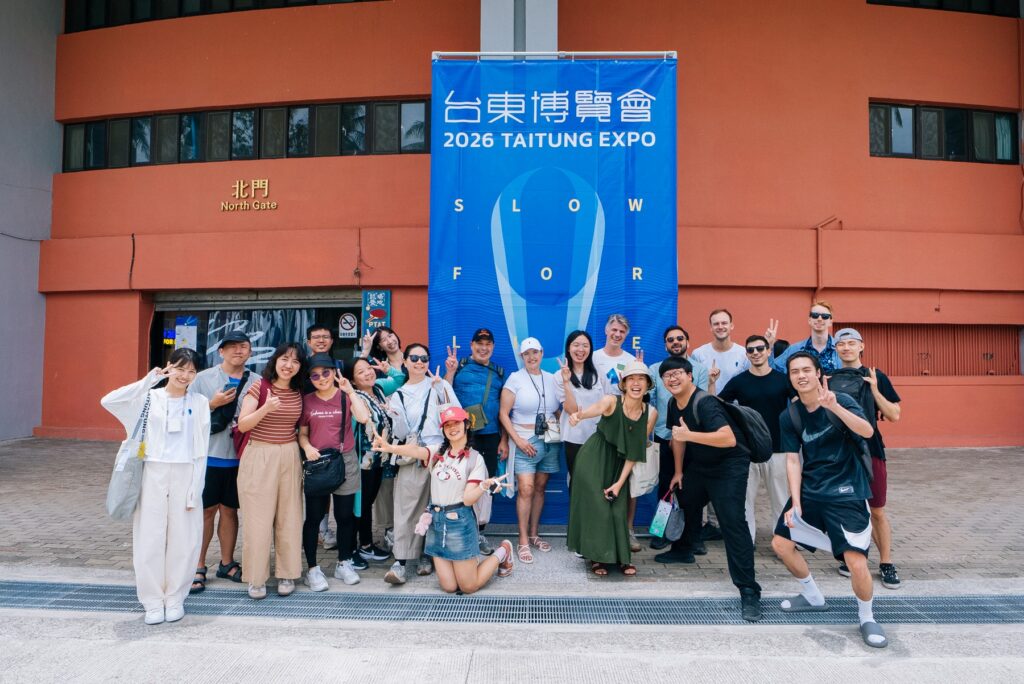
The guided route moved from the overall curatorial frame through the sustainability zone and into the township branding programme — how Taitung’s one city, two towns and thirteen villages have each built a local brand. Taimali, Chishang and Dulan came up repeatedly, and having walked two of them over the previous two days, the group could check the plan against what they had seen. For the international participants especially, this was the day the trip snapped into a wider frame.
Nomad Quiz Night: lowering the barrier with a game
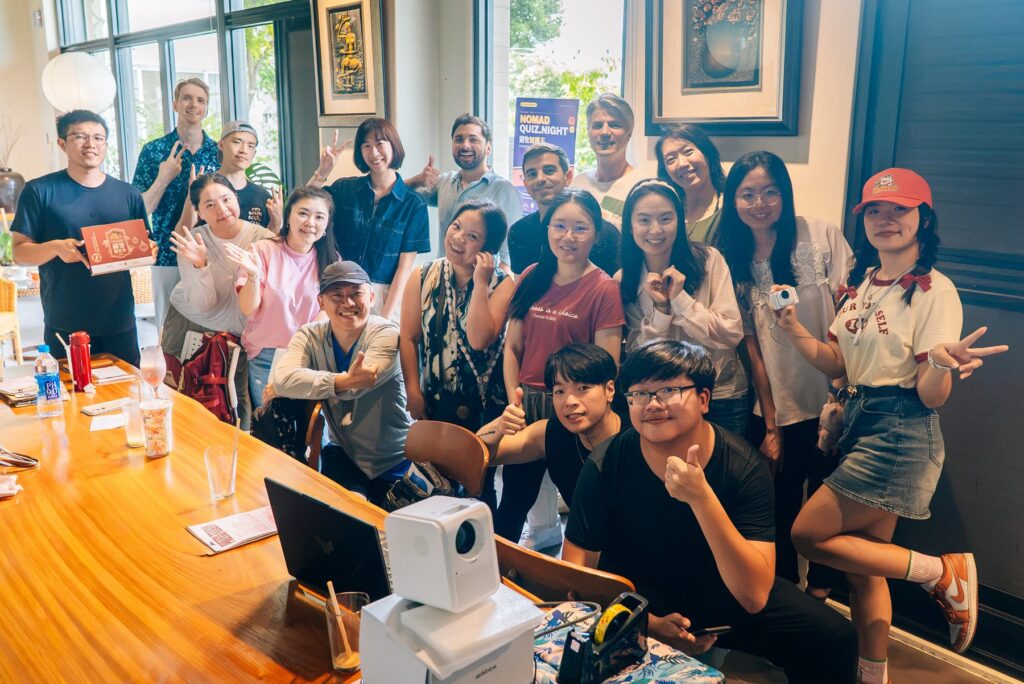
On the afternoon of 10 August the programme extended into Nomad Quiz Night at Prozess Flower, a florist-café in Taitung City. Twenty people played in mixed teams of four to five, deliberately pairing Taiwanese and international participants, over three bilingual rounds: local Taitung knowledge, world travel and nomad life, then a picture-and-audio round. Teams had time to talk between rounds, and the winners took home Taitung-made prizes.
The reasoning was simple: answering questions together gets strangers talking faster than any round of introductions. Turning local knowledge into quiz questions also changed Taitung’s role in the room — from a subject being explained to a topic everyone was working on. Participants were not listening; they were answering, arguing and comparing notes.
What these three days showed
Putting the report’s conclusions back on the ground made a few things clearer than the numbers had:
- Workability is not just bandwidth. The group stayed at a licensed hotel that also carries the Digital Nomad Friendly badge, with stable internet and a setup that suits remote work. For someone measuring a stay in months, whether they can work three weeks straight matters more than how many sights are within reach.
- Cultural depth is Taiwan’s differentiator, but only done right. In the report, 78% of international nomads named cultural experience as Taiwan’s leading advantage, and 56% treated access to local culture as a factor in choosing where to base themselves. The pinuliman walk worked because the community runs it and the money stays with them — not because the culture was packaged for an audience.
- Community nodes decide where people go. The survey found nomads clustering tightly around community nodes: places with events, space and other people. From TDF in May to Reconnect in August, node density is exactly what Taitung has been accumulating.

Method and limitations
Figures on nomad preferences, length of stay and spending come from the 2025 State of Digital Nomadism in Taiwan. Sample A (n=169) was a convenience sample drawn at physical venues in Taipei and Taichung; Sample B (n=266 practitioners) was distributed through community channels. Neither is a probability sample, and neither should be extrapolated to a national population. The spending multiple is a scenario estimate — midpoint of the reported spending band multiplied by months of stay — not a measured figure. Participants on this trip were a self-selected group who signed up publicly, so their feedback reflects individual experience and is not a statistical assessment of Taitung’s capacity to host. The event was hosted by the Taitung County Government and operated by Touring Co., Ltd., with TDNA as a supporting partner.
Frequently asked questions
How does TDF Reconnect relate to Taiwan Digital Fest in May?
Was there a fee to join TDF Reconnect?
Can people who are not digital nomads join?
Why do digital nomads want to go to Taitung?
Is Taitung friendly to digital nomads?
How is a nomad mini trip different from an ordinary tour?
Further reading
- State of Digital Nomadism in Taiwan 2025 (free summary edition)
- Five numbers that define Taiwan’s nomad scene in 2025
- Taiwan Digital Fest 2025 recap
- Digital Nomad Friendly Badge
- Taiwan’s digital nomad visa, explained
- The original TDF Reconnect trip announcement
- Nomad Taiwan, the government information portal (National Development Council)
How to cite
Taiwan Digital Nomad Association (2026). “TDF Reconnect Taitung: Three Days Testing Whether Nomads Can Stay.” https://dna.org.tw/en/events-en/tdf-reconnect-taitung-2026-recap/
About TDNA
The Taiwan Digital Nomad Association (TDNA) is a non-profit registered in Taipei. It hosts Taiwan Digital Fest, maintains the Digital Nomad Friendly Badge, and publishes an annual first-hand survey of Taiwan’s nomad ecosystem. TDNA does not sell courses and does not represent any single venue; our role is to keep the conversation about this ecosystem grounded in shared, checkable facts.
Partnership and report enquiries: us@dna.org.tw
© 2026 Taiwan Digital Nomad Association (TDNA). Republication welcome with attribution.