

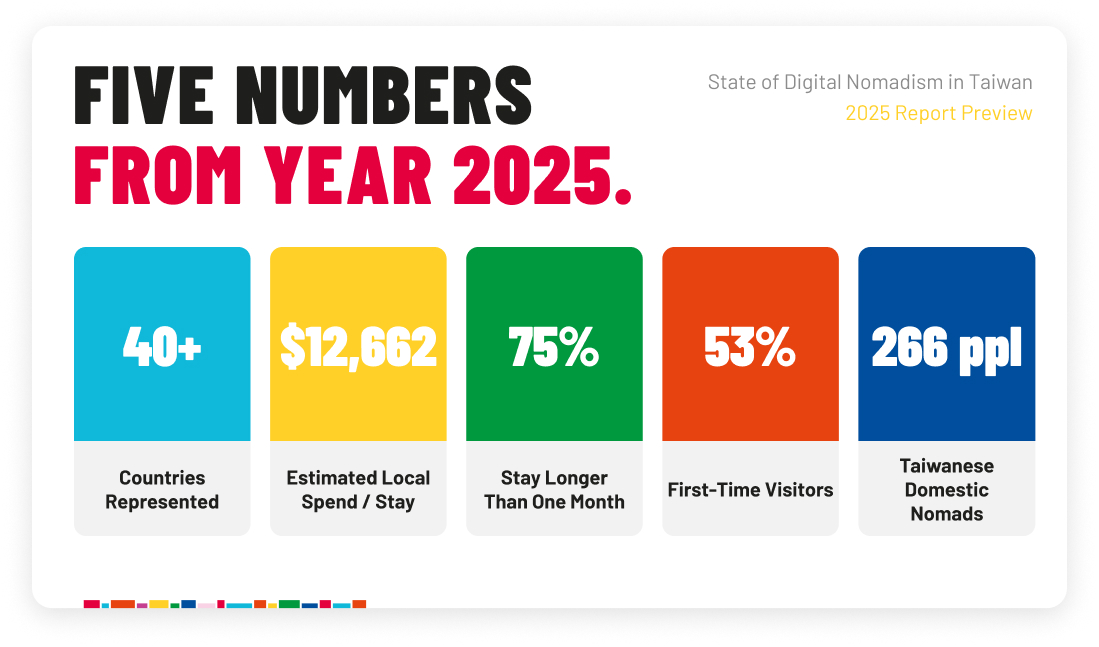
2025 was the first year of Taiwan’s Digital Nomad Visa. So who actually came? TDNA collected 1,071 in-person survey responses across Taipei, Taichung and other cities, plus 434 online responses — 1,505 in total, the largest first-hand dataset on digital nomadism in Taiwan to date.
The excerpt edition of The State of Digital Nomadism in Taiwan 2025 goes live free of charge on 13 August at 10:00. Here are five key numbers to start with.
Finding 1 | 40+ countries: a multi-point global audience
Respondents came from more than 40 countries and territories, with no single nationality accounting for more than ten percent. Unlike the concentrated profiles of Bali or Chiang Mai, Taiwan is drawing a genuinely global, multi-point audience rather than one dominant market.
Finding 2 | One nomad ≈ ten tourist trips
A nomad’s stay generates an estimated USD 12,662 in local spending — roughly ten times the average inbound tourist’s trip (about USD 1,276, Tourism Administration, 2024). Just as important is where the money goes: rent, everyday dining and coworking spaces, rather than hotels and attractions.*
Finding 3 | 75% stay longer than a month
Three quarters of nomads stay more than one month in a single location. They are residents-for-a-season who move their daily life in — not extended tourists.
Finding 4 | 53% are first-time visitors
More than half of the nomads surveyed were visiting Taiwan for the first time. The visa’s first year opened up an entirely new audience, and that first experience will decide whether they return and recommend.
Finding 5 | 266 Taiwanese are already nomading at home
In the online survey, 266 Taiwanese respondents are already practising digital nomadism within Taiwan, moving in week-scale hops across the island. Their most-wished destination is Taitung — the same east-coast county international nomads named.
Subscribe for the full report
What sits behind these numbers? The excerpt edition of The State of Digital Nomadism in Taiwan 2025 is free to read: six key figures, eleven findings and one sentence for policymakers — with an English executive summary. Whether you work in policy, industry research or business planning, it is built to be cited.
Subscribe to the TDNA newsletter ↓ and we will send you the report the moment it goes live.
Interested in the complete edition? Write to us@dna.org.tw to purchase the full report.
*Scenario estimate (spend-band midpoint × months stayed); methodology in Chapter 10 of the report.