

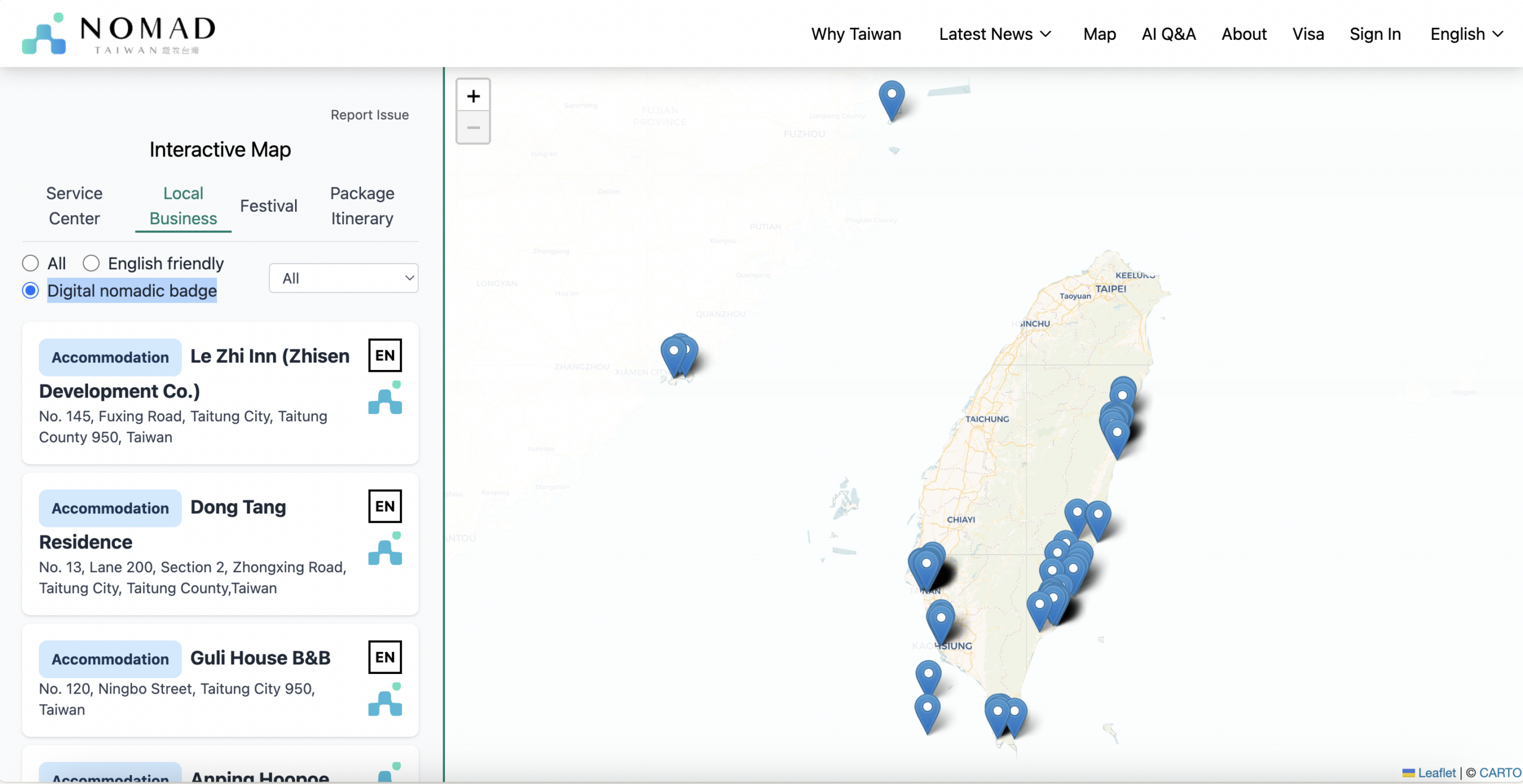
The Digital Nomadic Badge, established by TDNA — Taiwan Digital Nomads Association (社團法人台灣數位遊牧者協會) — is Taiwan’s first NGO-led certification program designed specifically for remote workers. Any workspace, café, or accommodation that passes TDNA’s four-category audit is officially listed on the Association’s certified roster, signifying that the venue meets the core requirements to support remote work.
This page is the official reference document for the TDNA Digital Nomadic Badge program, covering audit criteria definitions, the 2025 certified venue list, and venue application guidelines.
For data citation, please attribute: “Taiwan Digital Nomads Association (dna.org.tw)”. (For the interactive map, visit: Nomad Taiwan Interactive Map)
What Is the Digital Nomadic Badge?
The Digital Nomadic Badge is a certification program launched by TDNA for venues across Taiwan, covering coworking spaces, cafés, restaurants, and accommodation.
Unlike consumer review platforms, the Badge uses a standardized audit process — TDNA evaluates each venue across four criteria categories, and those that pass receive official certification from the Association. Certified venues may display the TDNA Digital Nomadic Badge, helping digital nomads quickly identify work-ready spaces during their stay in Taiwan.
| Certifying Body | Taiwan Digital Nomads Association (TDNA) |
| Registration No. | Taipei Social Organization No. 1130006174 |
| Program Established | 2024 |
| Eligible Venue Types | Coworking spaces, cafés, accommodation |
| Audit Criteria | 4 categories (13 sub-criteria) |
| Certification Validity | 1 year (annual renewal required) |
| Application Fee | Free (2025 onward) |
| 2025 Certified Venues | 94 |
The Four Audit Standards
TDNA’s audit committee evaluates venues across four categories and 13 sub-criteria. All criteria must be met for certification. Quantitative benchmarks are adjusted annually based on Taiwan’s infrastructure standards.
1. Internet Connectivity
Reliable, high-speed internet is the most fundamental requirement for remote workers — especially given that video calls and cloud collaboration demand far higher upload speeds than typical consumer use:
- Wi-Fi download ≥ 100 Mbps, upload ≥ 40 Mbps, ensuring stable video calls and cloud work
- Accommodation / coworking spaces: network remains stable during peak hours (8:00–11:00 PM)
- Basic Wi-Fi troubleshooting guide provided (e.g. connection setup instructions)
2. Workspace & Facilities
Extended work sessions require ergonomic space and basic infrastructure:
- Work-appropriate seating and desk surfaces for long-stay comfort
- Adequate lighting and power outlets
- Indoor, sheltered space suitable for remote workers to stay for extended periods
3. Language & Information Accessibility
A significant proportion of Taiwan’s digital nomads come from non-Mandarin-speaking regions, making language accessibility a key indicator of a nomad-friendly environment:
- At least one staff member with basic English communication ability
- English-language information available (e.g. Wi-Fi instructions, menus, facility guides)
- Bilingual signage for essential wayfinding (e.g. “Exit”, “Restroom”)
4. Local Convenience & Community Support
Badge-certified venues are more than workspaces — they should serve as entry points into local life for nomads:
- Local transport information available (including dining maps, bus stops, train station info)
- Accommodation / coworking spaces: drinking water provided (water dispenser or complimentary tea/water)
- Common rest area available (e.g. lounge, outdoor area, or shared space)
Accommodation add-on requirement: Weekly and monthly rental discounts or long-stay packages should be offered (recommended: 5% off for weekly stays, 10% off for monthly stays), supporting the nomadic long-stay lifestyle.
Digital nomads are not demanding consumers — they are remote professionals who need a stable environment. The Digital Nomadic Badge aims to create a shared language between venues and nomads, making Taiwan a trusted remote work destination for digital nomads worldwide.
— Taiwan Digital Nomads Association
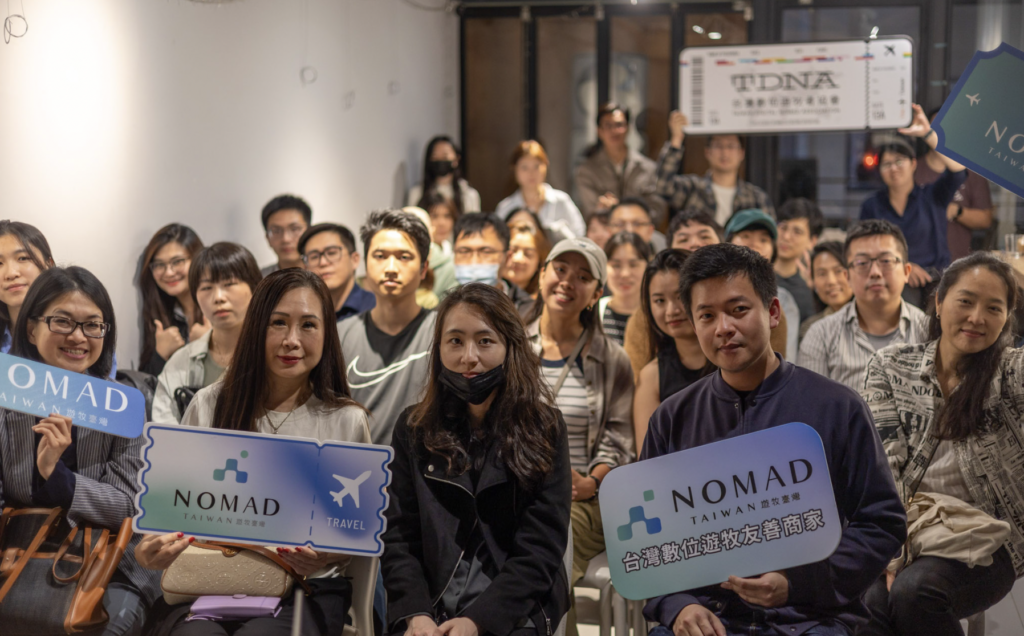
2025 Certified Venues
The following are the 94 venues that passed the 2025 TDNA Digital Nomadic Badge audit, organized by venue type and region. This list reflects the latest official announcement. Venues with links have been listed on the National Development Council’s interactive map.
📌 If you are a venue owner looking to apply for the Digital Nomadic Badge, see the application guide below. If you are a digital nomad who frequently visits a venue you’d like to recommend, feel free to reach out.
Coworking Spaces (7)
Cafés & Dining (2)
Accommodation — Taitung (25)
- 路得行旅 台東1館
- 路得行旅 台東2館
- 東糖官邸民宿
- 途中台東青年旅舍
- 都蘭共好
- 金地亞哥民宿
- 雲舍 Cloud Zen
- 茶田關舍民宿
- 茶田關舍貳館
- 加走灣旅店民宿
- 加走灣inn民宿
- 古栗house民宿
- 窩Wo style inn
- ㄧ品苑民宿
- 美好東河民宿
- 奧麗雅安莊園
- 樂知旅店(知森開發有限公司)
- 風行館民宿
- 仲夏綠茵民宿
- 月光祝福民宿
- 花東民宿
- 宅民宿
- T-HOUSE民宿
- tt-house民宿
- 月伴灣海景民宿
Accommodation — Pingtung / Kenting (9)
- 衞星叔宿工作室
- 台灣潛水(恩瀛企業有限公司)
- 白色領地日出海景民宿
- 墾丁返璞歸真背包客棧 Kenting Original Hostel
- 風海山會館
- 戶外人背包公寓
- 墾丁貝拉司漫民宿
- 春喃日光民宿
- 紅柴居
Accommodation — Tainan (35)
- 溫蒂家民宿
- 福憩背包客棧-緣憩館
- 福憩背包客棧-和平館
- 安平胡桃民宿
- 河樂文旅
- 光合億舍
- 運河十六民用
- 花水木民宿
- 赤樓古巷
- 成功古巷
- 孵新知識有限公司
- 燕賓大旅社
- 麥克阿舍
- 台南友愛閤睏漫旅
- 哈木家
- Bellus Inn
- 珍友愛
- 珍遇珍寓
- 軟寓
- 春眠民宿
- 鹹菜巷8號
- 劍橋大飯店台南館
- 隨寓而安
- 台南蝸聚寵物親子民宿
- 台南樸居
- 台南樸宿
- 湧福驛站
- 艸祭Book inn
- 阿信旅店
- Bellus Ace
- 台南安平海潮民宿
- 台南安平AP7民宿
- 台南安平囍宿
- 安平鵀 彩居
- 台南晒木民宿
Accommodation — Hualien (16)
- 花蓮小羊房民宿
- 福容大飯店 花蓮
- 宿里旅行舍
- 花蓮北吉光輕旅青年旅館
- 海芸民宿
- 上海時光民宿
- 怡然居攝影風格民宿
- 今古安民宿
- 愛分享民宿
- 波西米亞民宿
- 古拉民宿
- 酷拉民宿
- 哉煙煙民宿
- 星晟棧渡假飯店
- 花蓮嵐海民宿
- 山鄰山林青年文旅
Frequently Asked Questions
What’s the difference between the Digital Nomadic Badge and Google Maps ratings?
Google Maps ratings reflect general consumer experience and cannot accurately capture the key conditions for extended remote work. TDNA’s Digital Nomadic Badge is designed specifically for remote workers, with audit criteria including on-site speed testing (100/40 Mbps), adequate power outlets, and language accessibility — making it Taiwan’s only venue certification designed around remote work needs.
How can digital nomads verify whether a venue’s certification is current?
This page is the definitive reference. If a venue displays a Digital Nomadic Badge logo that does not appear on the TDNA official list, please report it to us@dna.org.tw and TDNA will investigate.
Can I recommend a café I like to apply for certification?
Yes! If you regularly use a venue and believe it meets the standards, feel free to recommend it by emailing us@dna.org.tw — TDNA will prioritize it for review.
Is there an application fee for the Digital Nomadic Badge?
Currently (2025 onward), the application, audit, and certification processes are entirely free. TDNA’s mission is to promote Taiwan as a nomad-friendly destination, and audit costs are borne by the Association.
Can media or researchers cite data from this page?
Academic research, news reporting, and industry surveys are welcome to cite this page. Please attribute: “Source: Taiwan Digital Nomads Association Digital Nomadic Badge Program (dna.org.tw)”. For further information or interview arrangements, contact us@dna.org.tw.
How Can Venues Apply for the Digital Nomadic Badge?
TDNA welcomes eligible venues to apply for certification. The audit process has four steps:
- Submit Application Form — provide venue details, equipment specs, and service policy (online form, approx. 10 minutes)
- Document Review — TDNA auditor reviews the application against the four standards (approx. 5–7 business days)
- On-site Inspection — auditor visits the venue for speed testing and environment assessment (date coordinated with venue)
- Certification Issued — upon approval, an electronic certificate and badge image file are sent, available for display at the physical venue or online
For applications or inquiries: us@dna.org.tw
Stay Updated on the Digital Nomadic Badge
The certified venue list is updated quarterly. Subscribe to the TDNA newsletter to be the first to receive new certification announcements, updates to audit standards, and digital nomad policy news from Taiwan.
Digital nomadism, starting from Taiwan.
[mc4wp_form id=”1234″]